
The well principles
Healthy offices and work environments have long since ceased to be a trend, but a necessity. More and more companies are realizing that a well-designed interior not only determines the appearance of a workplace, but also directly affects productivity, health and job satisfaction. For us, the WELL principles are paramount, both within our own organization and for those of our clients. With our own office that meets the WELL criteria, we try to create a pleasant and healthy working environment to create for our colleagues & visitors . Practice what you preach.
How do you make sure an interior really contributes to well-being? This is where the WELL Building Standard comes in. This international certification focuses entirely on improving the health and comfort of a building's users. What exactly does WELL entail? And why is it so relevant to modern workplaces? We'll take you through the principles of WELL and how you can apply them.
Developed by the International WELL Building Institute (IWBI), the WELL Building Standard focuses on science-based methods for making work environments healthier and more pleasant. Whereas other certifications such as BREEAM and LEED focus primarily on sustainability and energy efficiency, WELL is all about the man behind the interior.
The system rates buildings based on multiple categories that contribute to employee health and well-being. These include air and water quality, lighting, ergonomics and acoustics. WELL offers a scoring system that meets the needs of various companies. This includes inclusivity and diversity in workspaces, as well as innovative technologies such as smart climate control and advanced air filtration systems.
WELL goes beyond simply creating a healthy work environment for your employees. It is an intentional strategy by which an organization connects employee wellness to broader business goals. For example, employee wellness directly impacts presentations and productivity. This contributes to organizational goals such as better quarterly results, higher engagement, lower absenteeism and, all in all, being an attractive employer. WELL supports success, resilience and future-proofing of organizations.
Park Office | furnished according to WELL principles
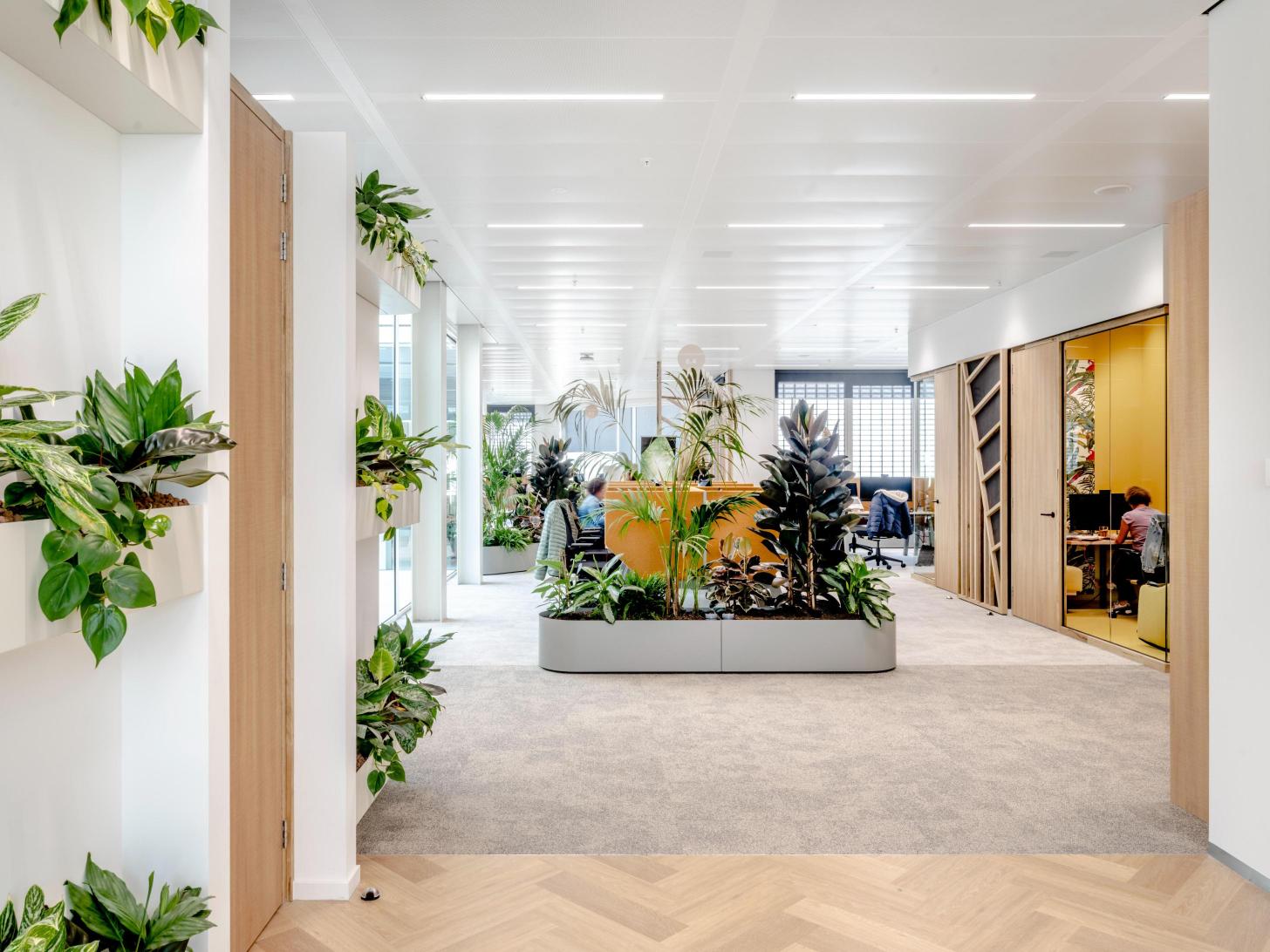
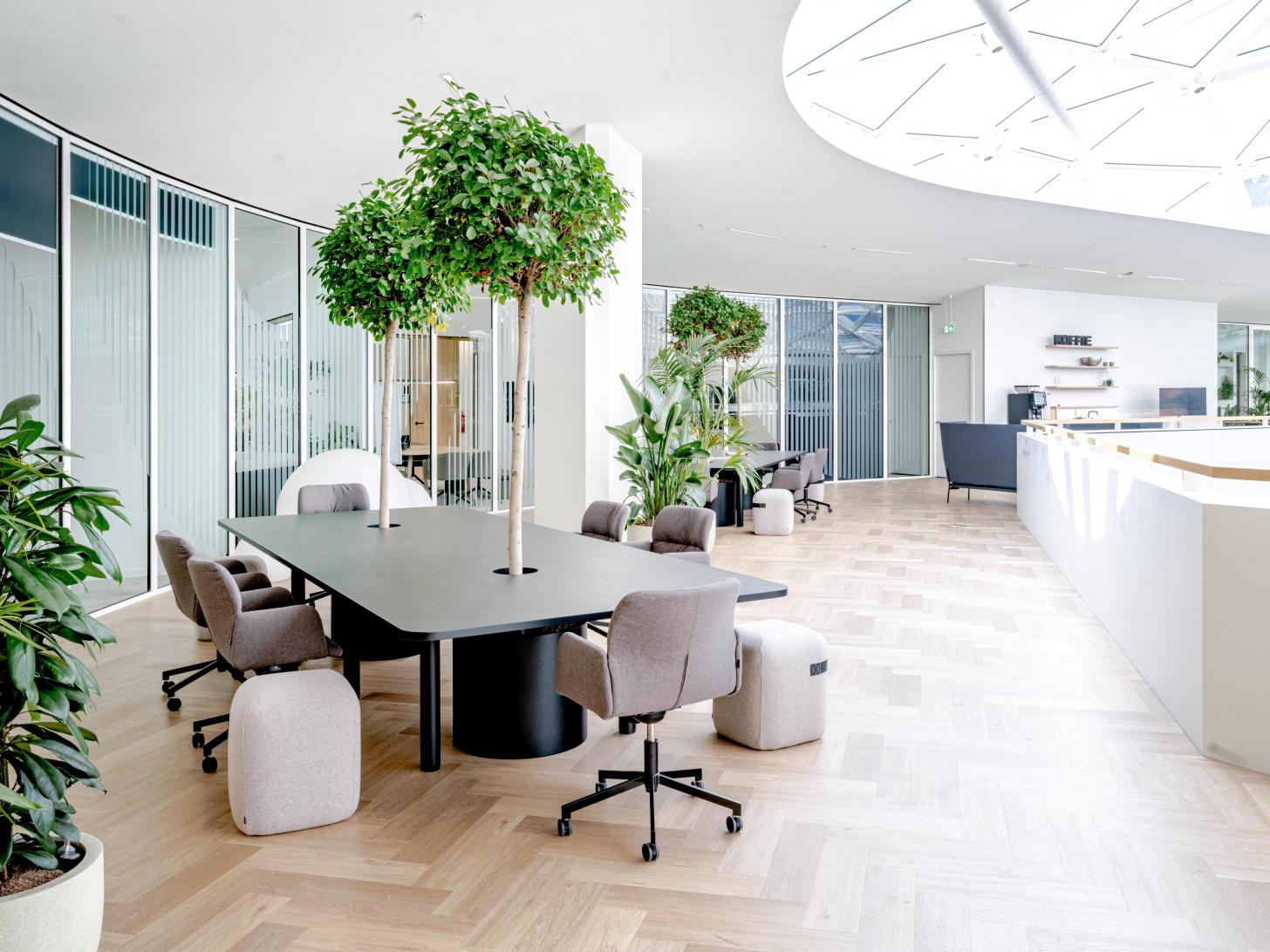
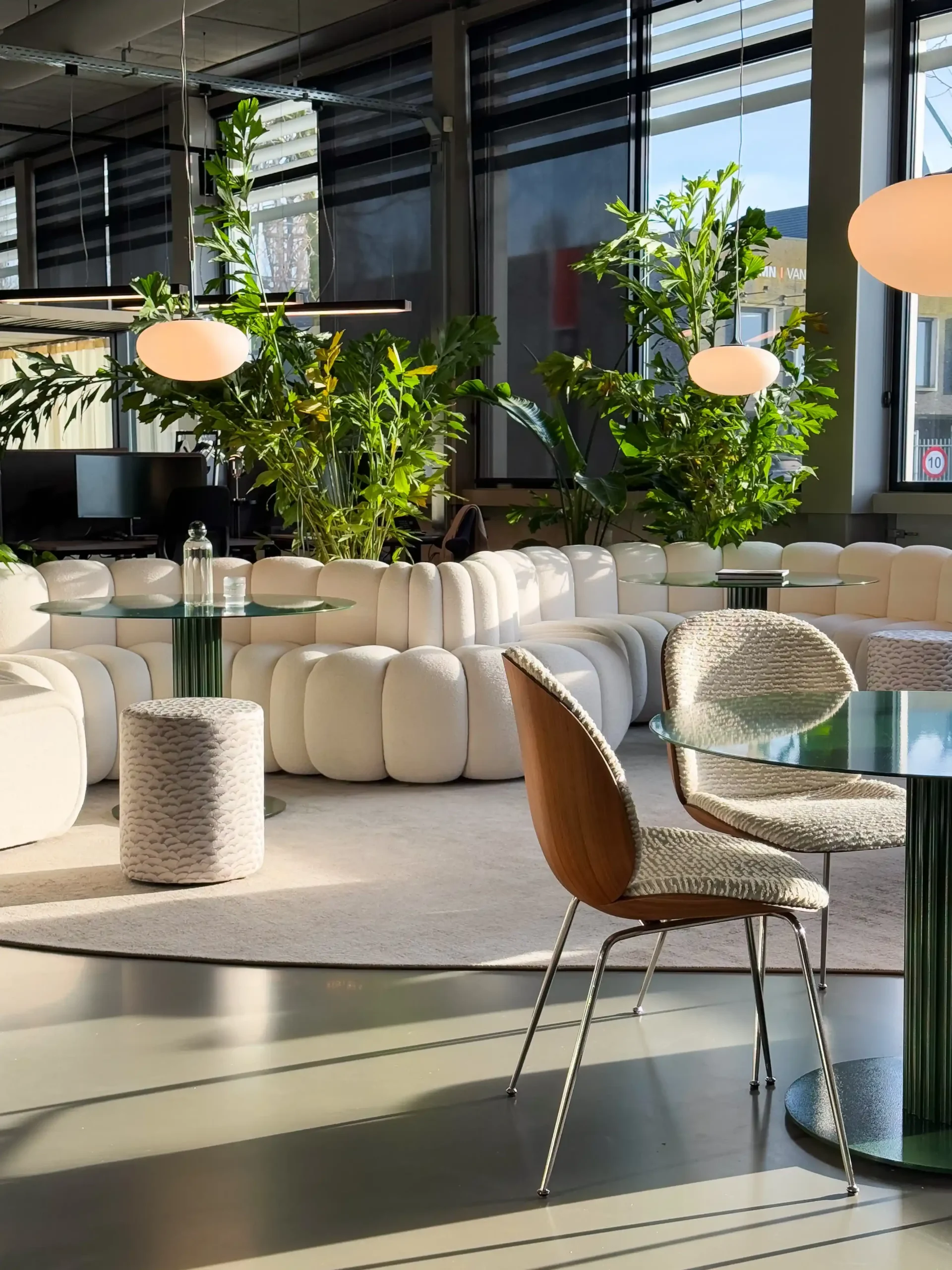
In the midst of the rugged surroundings of the NDSM wharf in Amsterdam Noord is located our own office, fully furnished and built according to WELL principles. Upon entering, you step into a working environment with flowing lines and organic forms, where health, well-being and work happiness are central. With ample use of plants and natural materials, everything is designed according to the biophilic design principle. This reduces stress and strengthens the connection between user and nature. However, biophilic design goes beyond the use of materials and plants alone. Good air quality, filtered water, healthy food, natural light, comfort, vitality and mental health are just as important to create a healthy and inspiring work environment. All designed and built according to WELL principles.
WELL shows how our physical and social environment affects health, well-being and performance. The model was developed over 10 years and is based on current scientific research, with more than 7,000 sources. Within WELL, practical guidelines are given for buildings and organizations, divided into 10 themes:
DPG Media | BREEAM certified
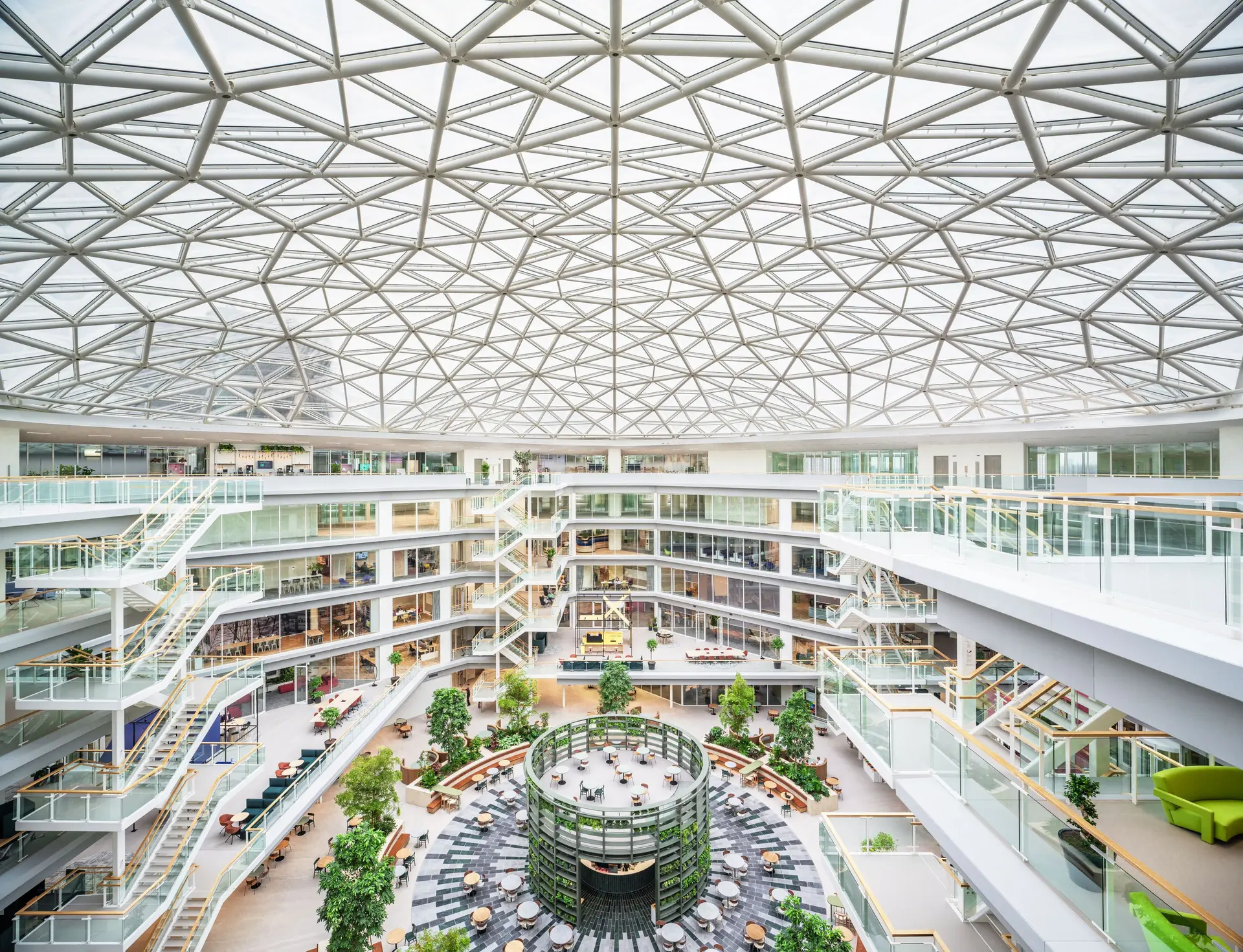
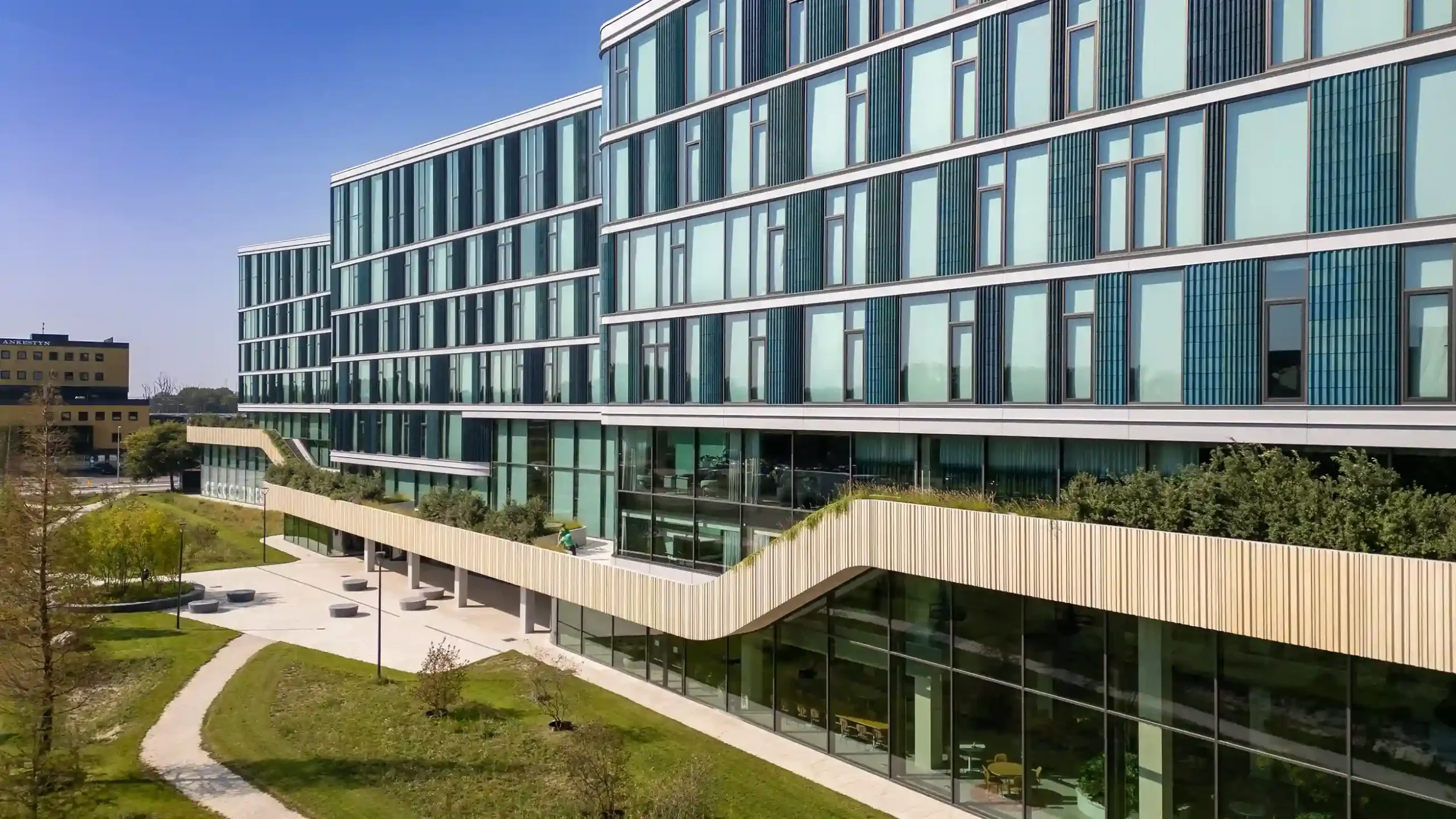
EDGE Amsterdam West | WELL Platium
When designing modern working and living environments, various certifications come along, such as WELL, BREEAM and LEED. Although sometimes referred to interchangeably, these standards focus on different aspects of buildings and interiors.
WELL
WELL certification focuses on the health and well-being of the people who work or stay in a building. This includes not only ergonomics and comfort, but also air quality, water, food, light, sound, mental health and exercise. The goal is to create an environment that contributes to productivity, energy and job satisfaction.
BREEAM
BREEAM focuses primarily on sustainability and energy efficiency. This certification assesses buildings on energy use, water use, material selection, waste management and environmentally friendly building processes, among other things. The goal is to make a building as sustainable as possible, with minimal impact on the environment.
LEED
LEED (Leadership in Energy and Environmental Design) has a similar focus to BREEAM, but additionally looks at building performance and environmentally friendly design. Among other things, it encourages the use of sustainable materials, water conservation, energy efficiency and healthy indoor air quality.
Combination of certifications
A WELL certification ties in well with BREEAM or LEED. Whereas BREEAM and LEED primarily guarantee the sustainability of a building, WELL ensures that the building also contributes to the health and well-being of its users. Combining these certifications creates a work environment that is both sustainable and people-oriented.
Athora | WELL Platium & BREEAM Outstanding
A great example is the project design for insurer Athora. Athora's housing in EDGE Amsterdam West demonstrates how WELL principles and BREEAM sustainability reinforce each other. Whereas BREEAM focuses on the environmental performance of the building, WELL focuses on the well-being, comfort and health of the user.
In EDGE West, these two worlds come together. The interior of Athora is in line with this: a green, light and clear working environment with various work and consultation areas that support hybrid working. Thus, sustainability is not only technical, but also people-oriented - a work environment that contributes to both performance and well-being.
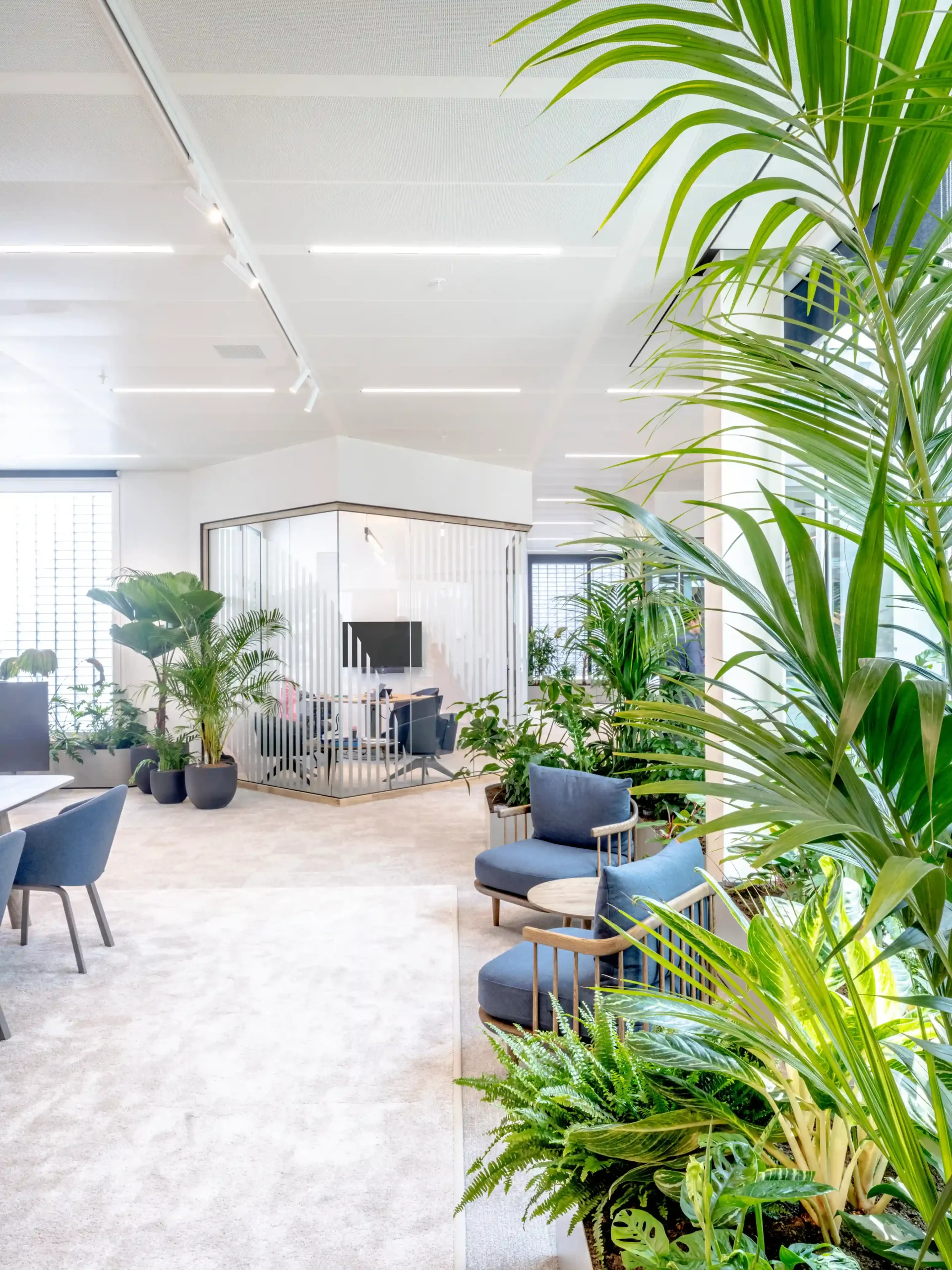
At InteriorWorks, we are all about interiors that are not only beautiful, but also functional and conducive to well-being. With the WELL principles in mind, we start our projects and where we can and may, we apply WELL. Thus, we design spaces or select furniture that are not only visually attractive, but also have a positive impact on health, productivity and job satisfaction. Whether in offices, healthcare facilities or educational spaces, we ensure that every environment is inspiring and contributes to the well-being of the people who work or learn there every day.
In addition, we have a certified WELL AP (Accredited Professional) in training so that we can expertly advise our clients on increasing wellness and vitality in their work environments.
Wondering how WELL principles can be applied to your office? Get in touch with our expert.